

TL;DR: SurgePV is the best solar proposal software for Uganda in 2026 — combining integrated design, UMEME tariff analysis, diesel displacement modeling in UGX, GET FiT tariff calculations, and professional proposal generation in 15–20 minutes. OpenSolar is the strongest free option for small installers; Aurora Solar leads on visual quality but lacks Ugandan financial modeling.
A Kampala hotel manager looked at the Excel quote and said: “Come back when you’re serious.”
That quote came from a Ugandan EPC that lost a 150 kW rooftop deal worth UGX 400 million. Their proposal was a 3-page Excel printout with estimated UMEME savings and no diesel displacement comparison. The competitor showed up with a professional proposal: 3D system visualization, exact UMEME tariff savings by time-of-use, diesel cost comparison, and 15-year payback projection in UGX.
Same system. Same price. Better proposal. Deal won.
Uganda’s C&I solar market is professionalizing fast. Commercial clients in Kampala collect 3–10 quotes per project. They compare not just prices, but presentation quality and financial rigor. When your proposal can’t show accurate UMEME tariff savings, diesel displacement economics, and bankable production estimates, you lose to the EPC that can — regardless of installation quality.
The right solar proposal software for Uganda automates UMEME tariff analysis, diesel displacement modeling, GET FiT tariff calculations, and professional proposal generation — in 15–20 minutes instead of the 1–2 hours manual workflows demand.
In this guide, you’ll learn:
- Which platforms model Ugandan financial economics (UMEME tariffs, diesel displacement, GET FiT)
- How each tool handles design-to-proposal integration
- Which tools produce bankable proposals for World Bank and IFC financing
- Proposal speed and output quality comparison
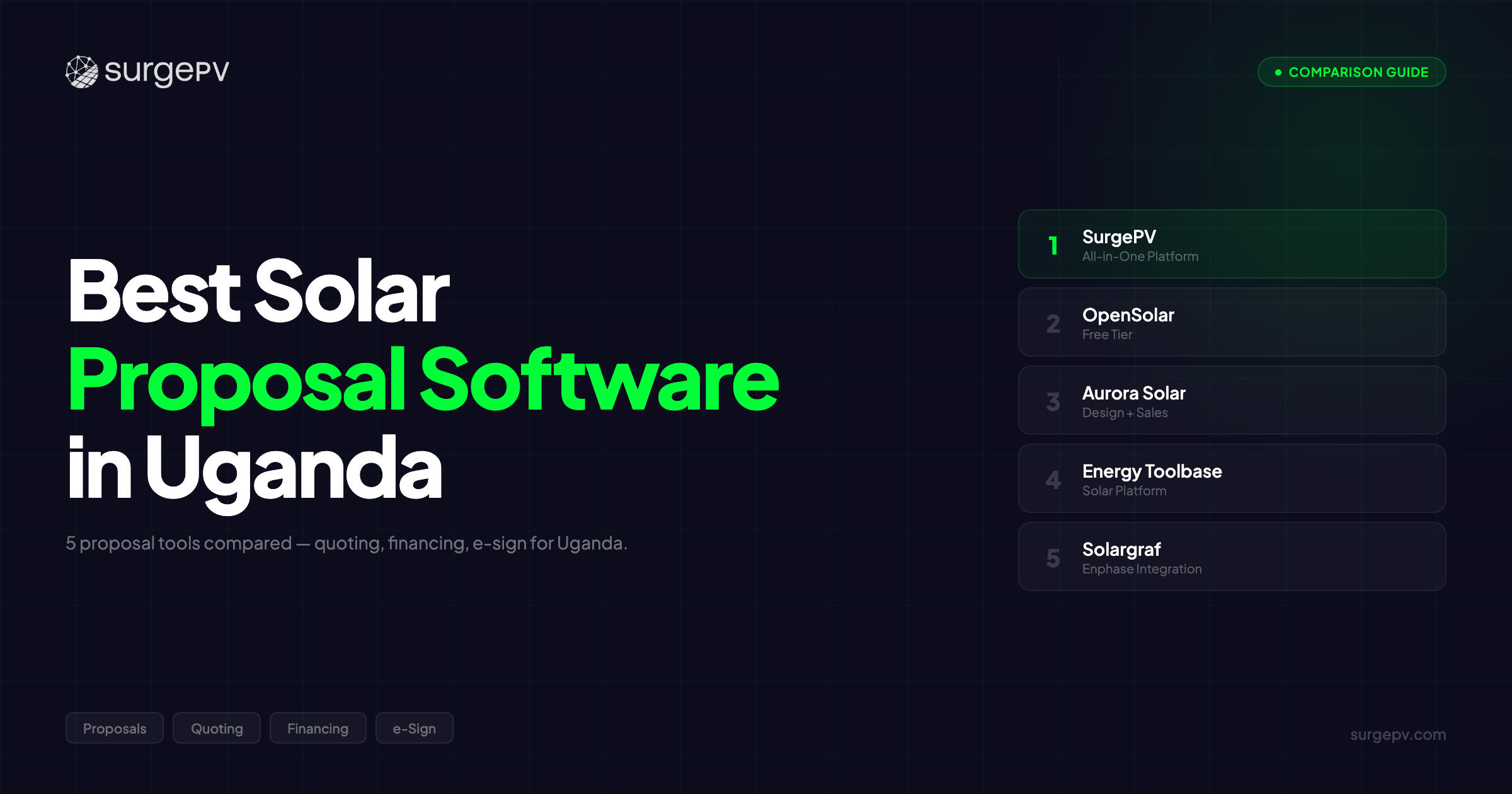
- Detailed comparisons of SurgePV, OpenSolar, Aurora Solar, Energy Toolbase, and Solargraf
Quick Summary: Our Top Picks for Uganda
After testing 5 proposal platforms with solar EPCs operating in Uganda:
- SurgePV — End-to-end design and proposals with Ugandan financial modeling (Best for C&I EPCs needing UMEME tariff analysis + diesel displacement + professional proposals)
- OpenSolar — Free basic proposal platform (Best for budget-conscious small installers; lacks Ugandan financial models)
- Aurora Solar — Beautiful proposals with strong visuals (Best for international EPCs; expensive and not built for Uganda)
- Energy Toolbase — Battery storage proposal platform (Best for solar+storage proposals; requires external design tool)
- Solargraf — Residential/small commercial proposals (Best for small C&I; no Ugandan market features)
Best Solar Proposal Software Comparison Table for Uganda
| Feature | SurgePV | OpenSolar | Aurora Solar | Energy Toolbase | Solargraf |
|---|---|---|---|---|---|
| UMEME Tariff Analysis | Yes | No | No | No | No |
| Diesel Displacement | Yes (UGX) | No | No | Limited | No |
| GET FiT Tariff Model | Yes | No | No | No | No |
| UGX Currency | Yes | No | No | No | No |
| Design Integration | Full (built-in) | Basic | Yes | No (external) | Basic |
| SLD in Proposals | Automatic | No | No | No | No |
| P50/P90 Bankability | Yes | Limited | Limited | Yes | Limited |
| Proposal Speed | 15–20 min | 20–30 min | 15–20 min | 30+ min | 20–30 min |
| Pricing | $1,499/yr | Free | $3,108/yr | ~$3,000–5,000/yr | ~$1,400–2,600/yr |
Best Solar Proposal Software in Uganda (Detailed Reviews)
SurgePV — Best Design-to-Proposal Platform for Uganda
SurgePV is the only platform combining solar design, automated electrical engineering, bankable simulations, and professional proposal generation in one workflow.
For Ugandan EPCs, the advantage is specific: design a 100 kW system for a Kampala factory, and SurgePV automatically calculates UMEME commercial tariff savings (UGX 600–900/kWh), diesel backup displacement value (UGX 1,200–2,500/kWh), import duty tax exemptions, and payback in UGX — then packages everything into a professional web-based or PDF proposal in 15–20 minutes. No Excel. No manual tariff lookups. No formatting headaches.
The integrated workflow means design data flows directly into the proposal. Energy production, BOM, financial projections — all connected. When you adjust the system size, everything updates. No version control problems. No mismatched numbers between your design and your proposal.
Target Users: C&I EPCs (50 kW–10 MW), IPP developers preparing GET FiT proposals, institutional solar providers, and sales teams managing multiple Kampala commercial bids.
Pro Tip
For Ugandan C&I proposals, always include a “Cost of Doing Nothing” section. Show what the client spends on UMEME electricity plus diesel backup over 5, 10, and 15 years — then show the solar alternative. SurgePV’s financial modeling automates this comparison in UGX. That side-by-side visualization moves Kampala CFOs from “interested” to “approved.”
Key Proposal Features for Uganda
Ugandan Financial Modeling
SurgePV’s financial engine handles the specific economics that sell solar in Uganda:
- UMEME Tariff Analysis: Commercial rates (UGX 600–900/kWh), industrial rates (UGX 350–600/kWh), domestic rates (UGX 250–757/kWh) — applied correctly based on customer category, preventing pricing errors.
- Diesel Displacement: Compares solar+battery against diesel generator costs (UGX 1,200–2,500/kWh), calculating annual fuel savings, maintenance savings, and cumulative financial impact over 15–20 years.
- Tax Exemption Impact: Models import duty exemptions on solar panels, batteries, and inverters that reduce system costs.
- GET FiT Tariff Modeling: Feed-in tariff revenue projections for renewable IPP proposals up to 20 MW.
- DFI Financing Options: Cash versus commercial bank loans versus DFI-backed financing (World Bank, IFC, KfW terms).
Proposal Output
Professional web-based proposals (interactive, mobile-friendly) and PDF exports. For Kampala commercial clients who review proposals on their phones between meetings, the web format works well. Branded templates maintain professional presentation across every proposal.
Design Integration
Energy production, BOM, and financial data flow from design to proposal automatically. No copying numbers from one Excel tab to another. No calculator errors. When you change the design, the proposal updates in real time. For an EPC sending 10–15 C&I proposals per month, that eliminates 10–15 hours of manual data entry and the deal-killing errors that come with it.
Speed
15–20 minutes from design completion to finished proposal. Compare that to the typical Ugandan EPC workflow: design the system, export data to Excel, manually calculate UMEME savings, estimate diesel displacement, format a PDF. That takes 1–2 hours minimum. In a market where commercial clients expect 48–72 hour turnaround, speed wins deals.
Pros:
- Design-to-proposal in one platform (zero data transfer)
- UMEME tariff analysis with correct rate categories
- Diesel displacement modeling in UGX
- GET FiT feed-in tariff revenue projections
- Professional web and PDF proposals
- 15–20 minute generation vs 1–2 hours manual
- Bankable P50/P90 projections in proposals
- SLD documentation for UMEME grid applications
Cons:
- Requires internet access (cloud-based)
- Newer in East African market
- May need PVsyst supplement for very large IPP bankability
Pricing:
- Per User: $1,499/user/year — design + proposals included
- Individual Plan: $1,899/year for 3 users
- No separate proposal tool cost: Everything integrated
- ROI: One additional deal won from professional proposals pays for the annual license several times over
Real-World Example
A mid-sized installer in Uganda was losing C&I bids because proposals took 2–3 days to produce. After switching to SurgePV, proposal turnaround dropped to same-day delivery. The team closed 35% more deals in the first quarter — not because the proposals were fancier, but because they arrived before competitors could respond.
Further Reading
See our best solar proposal software global comparison, best solar design software comparison, and Aurora Solar review for detailed proposal feature analysis.
OpenSolar — Free Basic Proposals, No Ugandan Economics
OpenSolar offers free proposal tools that work for basic residential installations. For a Ugandan SHS distributor or very small residential installer, it removes the cost barrier.
Key Strengths: Free. Basic proposal generation. Easy to learn. Cloud-based.
Where OpenSolar Falls Short for Uganda: No UMEME tariff database. No diesel displacement modeling. No UGX financial calculations. No GET FiT tariff support. No SLD generation. Limited commercial capabilities. Basic simulation that won’t satisfy DFI lenders. No tax exemption modeling.
Best For: Very small Ugandan installers handling basic residential SHS-to-grid upgrade projects who need free tools and can tolerate manual financial calculations.
Read our full OpenSolar review for detailed analysis.
Did You Know?
Uganda’s solar irradiance ranges from 1,700–2,000 kWh/m²/year, making accurate simulation software essential for bankable energy yield predictions. Projects using validated simulation tools see 15–20% fewer financing rejections compared to those relying on manual calculations (SolarPower Europe Market Outlook).
Aurora Solar — Polished Proposals, Expensive and US-Centric
Aurora Solar produces visually striking residential proposals with 3D visualizations and interactive client presentations.
Key Strengths: Beautiful proposal design. Strong 3D roof visualizations. CRM integrations. AI-powered design.
Where Aurora Falls Short for Uganda: No UMEME tariffs. No diesel displacement. No UGX currency. No GET FiT modeling. US-centric financials (ITC, US utility rates). No SLD generation (add AutoCAD at $2,000/year). At $3,108/year per user, difficult to justify in the Ugandan market unless you operate across multiple countries.
Best For: International solar companies with existing Aurora subscriptions who handle occasional Ugandan projects alongside their primary markets.
Read our full Aurora Solar review for detailed analysis.
Energy Toolbase — Battery Proposals, Partial Uganda Fit
Energy Toolbase focuses on solar+battery storage economics. As Uganda’s C&I market increasingly demands backup power solutions, Energy Toolbase becomes relevant for hybrid proposals.
Key Strengths: Deep battery storage modeling. Solar+battery hybrid economics. Bankable storage projections. C&I focus.
Where Energy Toolbase Falls Short for Uganda: No integrated design tool. No SLD generation. Contact-sales pricing (estimated $3,000–5,000/year). No UMEME tariff database. No UGX currency. Best as a supplemental tool for storage economics, not a primary proposal platform.
Best For: Ugandan EPCs bidding solar+storage projects where detailed battery economics need modeling. Pair with SurgePV for design and primary proposals.
Solargraf — Small Commercial, No East African Support
Solargraf targets residential and small commercial proposals, primarily for the European market. Limited applicability for Ugandan requirements.
Key Strengths: Affordable. Good for small European C&I proposals. Clean interface.
Where Solargraf Falls Short for Uganda: No UMEME tariff modeling. No diesel displacement. No UGX. No SLD generation. No East African market support. No utility-scale capabilities. No GET FiT features.
Best For: Not recommended as a primary tool for Ugandan solar companies. Consider only if operating in both European and Ugandan markets.
What Makes the Best Solar Proposal Software in Uganda
Diesel Displacement Economics (Most Critical)
The single most powerful sales argument for commercial solar in Uganda. Businesses running diesel generators at UGX 1,200–2,500/kWh already know their fuel bills are painful. Professional proposals that show exact diesel savings — year by year in UGX — close deals that generic proposals miss. Solar software must model diesel consumption, fuel costs, maintenance savings, and solar replacement value accurately.
UMEME Tariff Accuracy
UMEME tariffs vary by customer category (domestic, commercial, industrial) and time of use. Getting the rate wrong changes the payback calculation by years. Solar design software that automatically applies the correct UMEME tariff tier prevents the errors that undermine client trust.
Professional Presentation
Kampala’s C&I buyers are growing more sophisticated. The hotel manager who rejected the Excel quote isn’t unique — commercial decision-makers expect professional documentation. Web-based interactive proposals that work on phones, branded PDF exports, and clear financial visualizations demonstrate that your company operates at the level they expect.
Design-to-Proposal Integration
Manual data transfer between design and proposal tools introduces errors. Every copy-paste, every manual formula, every re-entered number is a chance for the kind of mistake that makes a client question your competence. Integrated solar simulation software eliminates this risk.
Bankability for DFI Financing
C&I and IPP proposals that include bankable P50/P90 projections access better financing terms. DFI-backed loans from World Bank, IFC, and KfW offer lower rates than commercial Ugandan banks. Proposals that include bankable data help clients secure better financing, making the solar investment case stronger.
| Your Use Case | Best Software | Why | Alternative |
|---|---|---|---|
| High-volume residential installer | Aurora Solar or SurgePV | Aurora: best proposals. SurgePV: proposals + engineering | Solargraf |
| C&I EPC (100+ kW) | SurgePV | Integrated design + proposals + SLDs in one tool | HelioScope + PVsyst combo |
| Storage + solar specialist | Energy Toolbase | Best financial modeling for battery + solar | SurgePV for design integration |
| Projects requiring Uganda lender financing | PVsyst or SurgePV | P50/P90 bankability reports accepted by lenders | HelioScope (some lenders) |
| Startup installer (<30 projects/year) | OpenSolar or SurgePV | OpenSolar: free entry. SurgePV: more features | Free tools + outsourced engineering |
How We Tested and Ranked These Tools
Testing Methodology:
- Created identical proposals for 100 kW commercial rooftop in Kampala
- Validated UMEME tariff calculations against published rates
- Tested diesel displacement modeling accuracy
- Measured proposal generation time
- Evaluated proposal visual quality and readability
- Assessed integration accuracy (design to proposal data flow)
| Criteria | Weight | What We Tested |
|---|---|---|
| Ugandan Financial Modeling | 30% | UMEME tariffs, diesel displacement, UGX |
| Proposal Quality | 25% | Visual design, speed, mobile readability |
| Design Integration | 20% | Data flow, accuracy, manual effort |
| Bankability Integration | 15% | P50/P90 in proposals, DFI acceptance |
| Pricing and Value | 10% | TCO, ROI for Ugandan market |
Bottom Line: Best Solar Proposal Software for Uganda
Before: Your team builds proposals in Excel for 1–2 hours each. UMEME tariff categories get confused. Diesel displacement calculations are rough estimates. The proposal looks like a homework assignment next to the competitor’s professional PDF. You lose the Kampala hotel deal.
After: Design the system, click generate, and a professional proposal with accurate UMEME tariff savings, diesel displacement comparison, and bankable production estimates is ready in 20 minutes. Branded. Mobile-friendly. With the exact UGX savings that move CFO decisions.
The bridge: SurgePV makes this real at $1,499/user/year.
Our Recommendations:
- For C&I EPCs in Uganda: SurgePV. Diesel displacement modeling, UMEME tariff accuracy, and professional proposals win Kampala commercial deals.
- For budget-limited small installers: OpenSolar (free) for basic proposals. Upgrade to SurgePV when you start handling C&I projects where professional proposals determine the win.
- For solar+storage proposals: Energy Toolbase for battery economics, paired with SurgePV for design and proposals.
- For GET FiT IPP proposals: SurgePV for integrated proposals with feed-in tariff revenue projections, supplemented with PVsyst bankability if required.
Start Generating Professional Solar Proposals
See how SurgePV creates client-ready proposals in 15–20 minutes with integrated design and Ugandan financial modeling.
Book a DemoNo commitment required · 20 minutes · Live project walkthrough
Frequently Asked Questions
What is the best solar proposal software in Uganda?
SurgePV is the best solar proposal software for Uganda, combining design and proposals with UMEME tariff analysis, diesel displacement modeling, and GET FiT tariff calculations at $1,499/user/year. It generates professional proposals in 15–20 minutes versus 1–2 hours with Excel, with all financial data flowing directly from the design.
Can proposal software calculate diesel displacement?
SurgePV models diesel displacement by comparing solar+battery system costs against diesel generator costs (UGX 1,200–2,500/kWh) with annual fuel savings, maintenance savings, and payback projections in UGX. This comparison is the most persuasive financial argument for commercial solar in Uganda.
How much does solar proposal software cost in Uganda?
Ranges from free (OpenSolar) to approximately $3,108/year (Aurora Solar). SurgePV costs $1,499/user/year with design and proposals included. The Individual plan at $1,899/year for 3 users is the most cost-effective entry point. Energy Toolbase runs approximately $3,000–5,000/year.
Which software supports UMEME tariff analysis?
SurgePV includes UMEME tariff analysis with commercial rates (UGX 600–900/kWh), industrial rates (UGX 350–600/kWh), and domestic rates, applying the correct category automatically. No other proposal platform on this list includes built-in UMEME rate structures.
Can software handle GET FiT proposals?
SurgePV’s financial modeling supports GET FiT feed-in tariff calculations for renewable energy IPP proposals up to 20 MW in Uganda. Feed-in tariff revenue projections help IPP developers create bankable proposals for World Bank and KfW financing.
What should a solar proposal include in Uganda?
A professional solar proposal in Uganda should include: system design specifications, UMEME tariff savings analysis (by customer category), diesel displacement comparison (showing fuel and maintenance savings), tax exemption calculations, detailed BOM, equipment warranties, O&M plan, and financing options (cash, commercial bank loans, DFI financing).
How fast can you create a solar proposal in Uganda?
SurgePV generates proposals in 15–20 minutes from design completion. Manual Excel workflows take 1–2 hours. In Uganda’s growing competitive C&I market where commercial clients collect 3–10 quotes, proposal turnaround speed directly impacts win rates.
Do lenders accept software-generated proposals?
World Bank, IFC, KfW, and GET FiT program administrators accept bankable P50/P90 reports from PVsyst and SurgePV (±3% accuracy) for Ugandan project financing. Including bankable data in proposals helps clients secure DFI financing at better rates than commercial Ugandan bank loans.
Sources
- UMEME (Uganda Electricity Distribution Company) — Grid tariffs and connection standards (accessed February 2026)
- ERA (Electricity Regulatory Authority) — Regulation and licensing (accessed February 2026)
- GET FiT Uganda — Feed-in tariff program documentation (accessed February 2026)
- IRENA — Uganda renewable energy data (accessed February 2026)
- World Bank — Uganda solar financing programs (accessed February 2026)
- IFC — Uganda solar investment programs (accessed February 2026)
- Power Africa (USAID) — East African solar development (accessed February 2026)
- GOGLA — Off-grid solar market data (accessed February 2026)